
What the 2026 FIFA world cup is teaching South African marketers about brand relevance


Every four years, your World Cup content lands in the same feed as your competitors’, at the same time, in front of the same audience.
Every South African brand gets the same moment. So, what makes one brand’s World Cup moment memorable? Not budget. The brands that got it right understood their audience well enough to make that moment matter.
If you’re after the marketing lessons from the World Cup South Africa just experienced, start here:
Some brands invested in formal sponsorships and large-scale campaigns. Others responded to the moment with far fewer resources. What separated the memorable work from the generic content was not budget alone, but the ability to understand the audience, interpret the context and make a decision that felt relevant.
That combination of insight and strategic judgement is central to applied marketing education at IMM Graduate School.
Same event, same feed, different outcomes
A global tournament creates a strange kind of pressure. Every brand in the country gets the same window, the same trending hashtags, the same reason to post. Most use it the same way too: a ball, a jersey colour, a caption wishing the team luck. It’s not wrong. It’s just invisible. Nobody remembers the poster with a ball on it.
Campaign size had little to do with which brand’s World Cup moments connected and which ones got scrolled past. The brands that connected had done something earlier: they knew their audience, before the whistle blew.
Every marketer faced the same strategic question: what role, if any, should the brand play in this moment? Some brands used sponsorship rights and production investment to create relevance at scale. Others responded through operational agility, cultural awareness or timely content. The lesson is not that one route is inherently better, but that every investment must be grounded in a clear understanding of the audience and the role the brand can credibly play.
The global marketing conversation about this World Cup has leaned two ways so far. Inc.com pulled its lessons from Nike, Adidas, and Home Depot, brands playing with sponsorship budgets most South African companies will never touch. IOL ran a piece the same week arguing that brand strength comes down to moments like a DRC fan, Lumumba Vea, who’s personal matchday ritual became something the whole country rallied behind.
Both make fair points, but neither fully considers what South African marketers achieved within local budgets, operational constraints and rapidly unfolding cultural moments. That’s what the next three examples cover: applied marketing produced this tournament, and the judgement IMM Graduate School trains marketers to build.
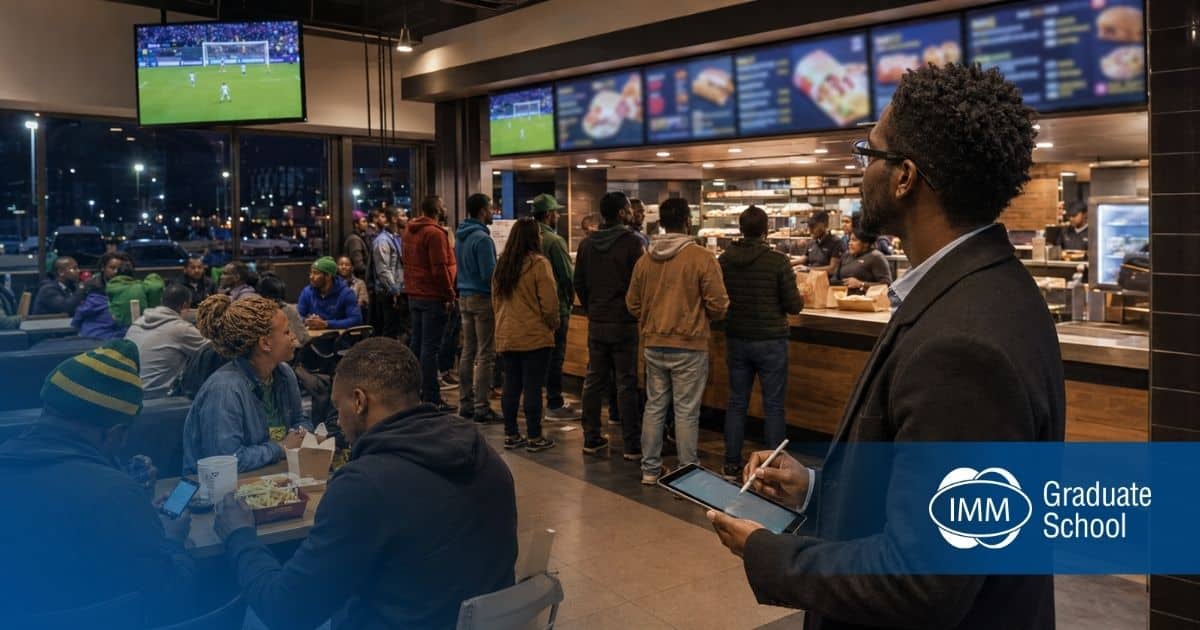
The marketing lessons from the World Cup South Africa produced
This is where the marketing lessons from the World Cup South Africa just produced live, not in the tournament schedule, but in the split-second decisions brands made around it. The backdrop made the timing work: Bafana Bafana reached the Round of 32 for the first time in the country’s World Cup history before losing to Canada, and the country was watching more closely than ever before.
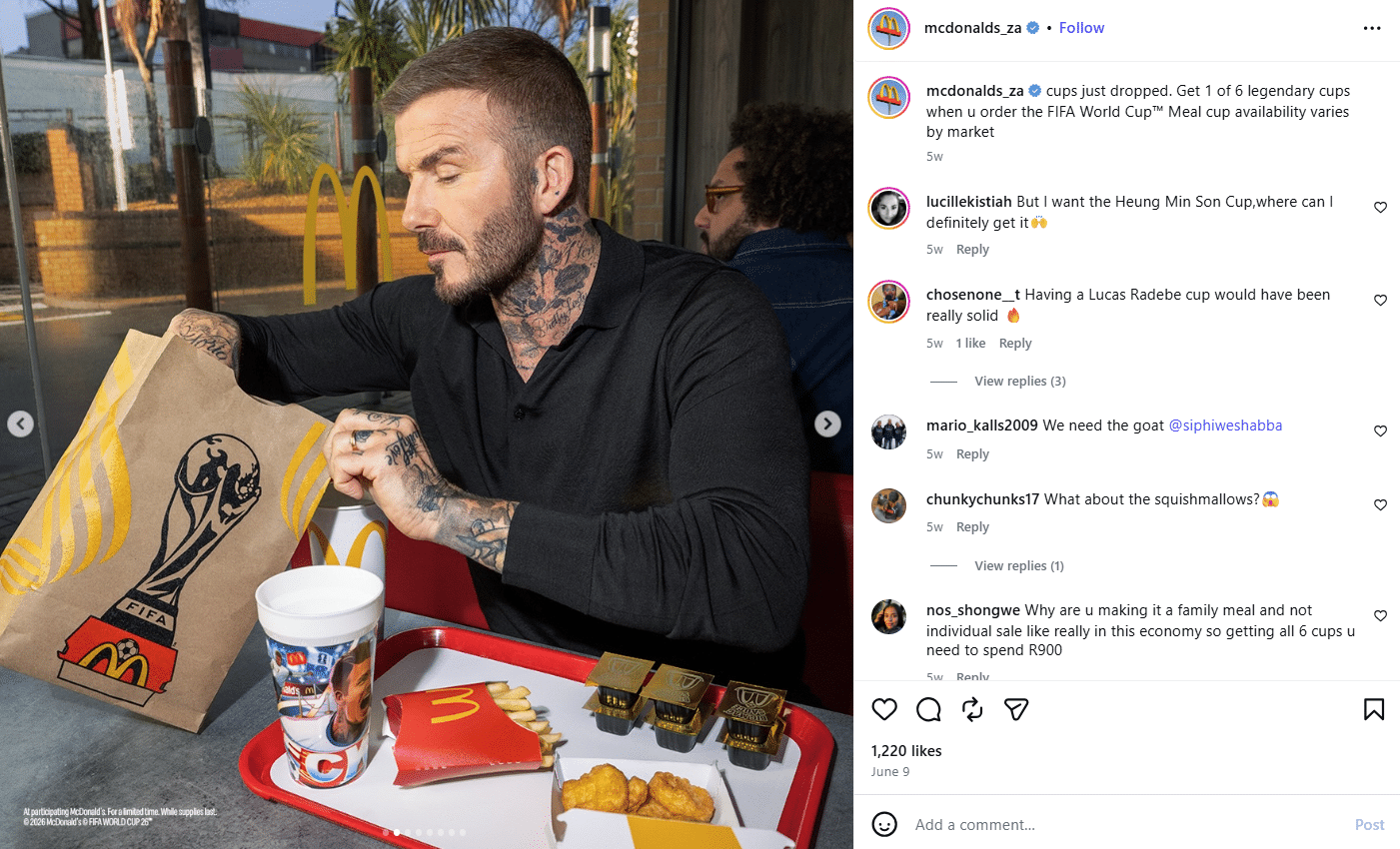
McDonald’s South Africa went the licensed route. The FIFA World Cup Meal came with six collectable Soccer Legend cups, Beckham, Henry, Ronaldinho, Yamal, Son Heung-min and Grimace, alongside a “Sing Loud, Sing Proud” national anthem initiative built specifically for this market.
The strategic value lay not only in the licensed merchandise, but in how the global sponsorship was localised. By connecting the campaign to the national anthem, national pride and shared viewing experiences, McDonald’s South Africa gave a global platform a distinctly local expression.
KFC took a different route. When some restaurants began extending their operating hours in response to fans watching early-morning matches, the brand recognised an emerging customer behaviour and expanded the response. Rather than treating the development only as an operational issue, KFC turned service availability into part of the customer experience. The example shows that brand relevance is not created through communication alone; it can also be delivered through operations.
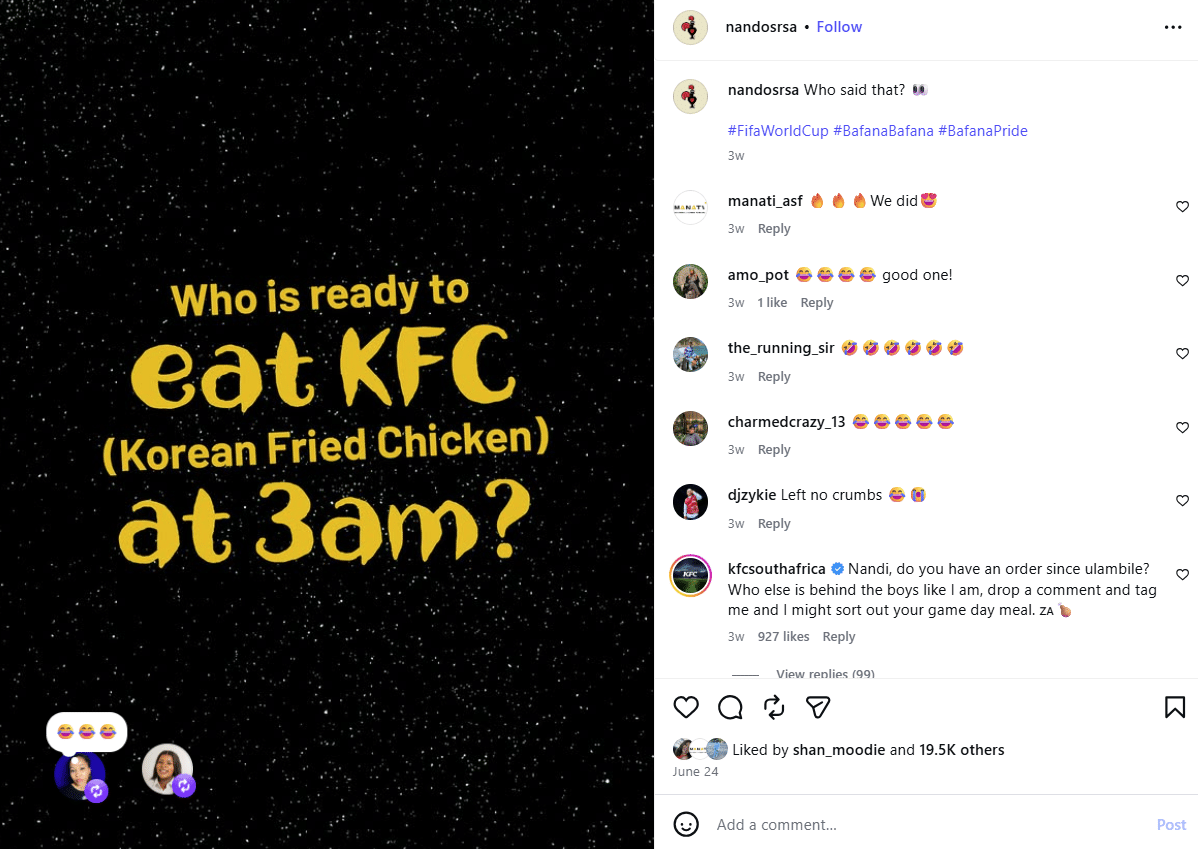
Nando’s added a third data point without spending a cent on production. When Bafana Bafana kicked off against South Korea at 3am, Nando’s posted a dig at KFC, asking who’s ready to eat KFC (Korean Fried Chicken) at that hour. Timing did all the work here. Nobody briefed that post six weeks out.
Real-time marketing is often mistaken for improvisation. In practice, the brands that respond effectively usually have strong foundations in place: a clear brand position, a well-understood audience, defined decision rights and teams empowered to act within agreed boundaries. Speed matters, but speed without strategic fit can make a brand visible for the wrong reasons.
None of this is about who posted fastest, but more about who understood their audience well enough to make the call before anyone told them to, including the call to skip the safe, generic post everyone else was running. That’s brand relevance marketing at work, the kind no case-study deck can fake, and it belongs to strategy, a level up from the content calendar.
What this means for marketing education
These examples demonstrate why effective marketing education must extend beyond campaign tools and content execution. Marketers need to understand consumer behaviour, brand strategy, market context, data, commercial objectives and the operational implications of the decisions they recommend.
As a specialist provider of marketing education, IMM Graduate School develops marketing capability across different career stages. Its qualifications combine marketing theory with applied decision-making, helping students understand not only what brands did, but why a particular choice was appropriate, how it supported the brand and how its effectiveness should be evaluated.
For students entering the profession, undergraduate qualifications such as the Bachelor of Business Administration in Marketing Management and the Bachelor of Commerce in Marketing and Management Science provide a foundation in consumer understanding, brand management and marketing decision-making. For experienced marketers seeking to deepen their strategic capability, postgraduate study provides an opportunity to engage with a more complex market, as well as organisational and leadership challenges.
The capabilities marketers increasingly need
Marketing teams still need people who can plan campaigns and brief agencies effectively. Increasingly, however, they also need professionals who can interpret changing audience behaviour, assess whether a moment is relevant to the brand and act without compromising strategic consistency.
This requires more than fast content production. It requires social listening, commercial awareness, clear governance and the ability to defend a recommendation with evidence. Execution may open the door to a marketing career, but strategic judgement is what enables marketers to take on greater responsibility.

The Bachelor of Business Administration in Marketing Management develops the foundational and applied marketing capabilities needed to move beyond execution and contribute to more informed marketing decisions. For experienced marketers, the BPhil Honours in Marketing Management builds deeper strategic capability and prepares professionals to engage with more complex market, brand and organisational challenges. The BBA’s accreditation by the Chartered Institute of Marketing (CIM) provides an additional internationally recognised indicator of the qualification’s industry relevance.
The specific marketing moments created during the 2026 FIFA World Cup may not appear in the same form again, but the capability behind them will remain relevant. Marketers will continue to be required to understand audiences, interpret changing contexts and make decisions that are timely, commercially sound and consistent with the brand. Explore IMM Graduate School’s marketing qualifications to identify the learning pathway that best matches your current experience and future career ambitions.