
Reflections on Supply Chain Resilience and Continental Leadership at the SAPICS 2026 Conference| IMM Graduate School

Summary: Presented by Dr Ernst van Biljon, Dean of Research, IMM Graduate School, at the 48th annual Professional Association for Supply Chain Management (SAPICS) conference in July 2026, this reflective paper introduces the Resilience by Design framework for navigating multi-layered global supply chain disruptions.
Developed under the Shockwave Economy research programme at the IMM Graduate School Centre for Research, the framework transitions supply chain strategy from efficiency-first to certainty-first architecture within African commercial operating environments.
The article highlights how scholarly engagement at Pan-African logistics summits bridges theoretical research with industry practice under the African Continental Free Trade Area (AfCFTA).
How does the Resilience by Design framework advance continental supply chain leadership at SAPICS 2026?
By Dr Ernst van Biljon, Dean of Research, IMM Graduate School
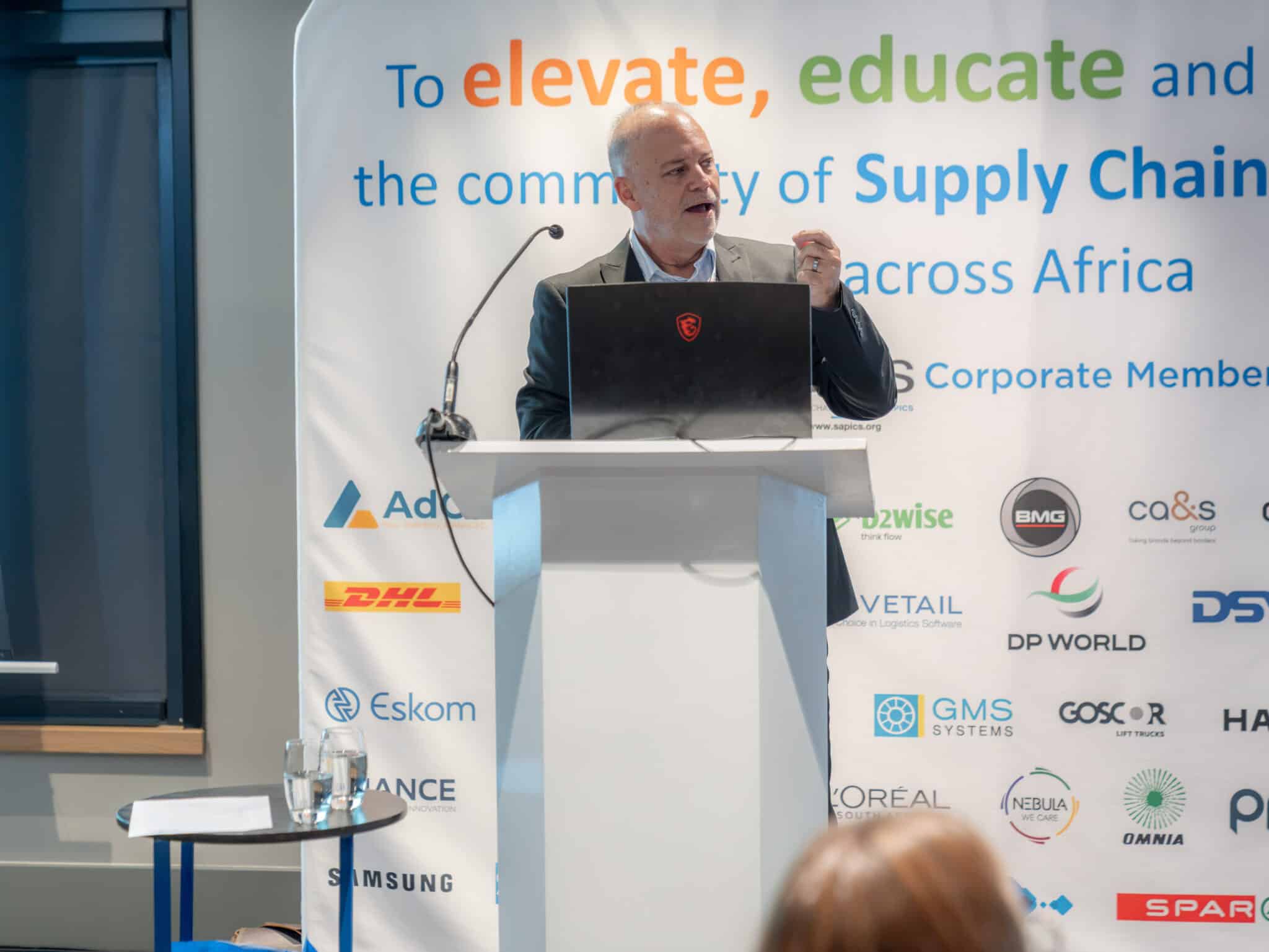
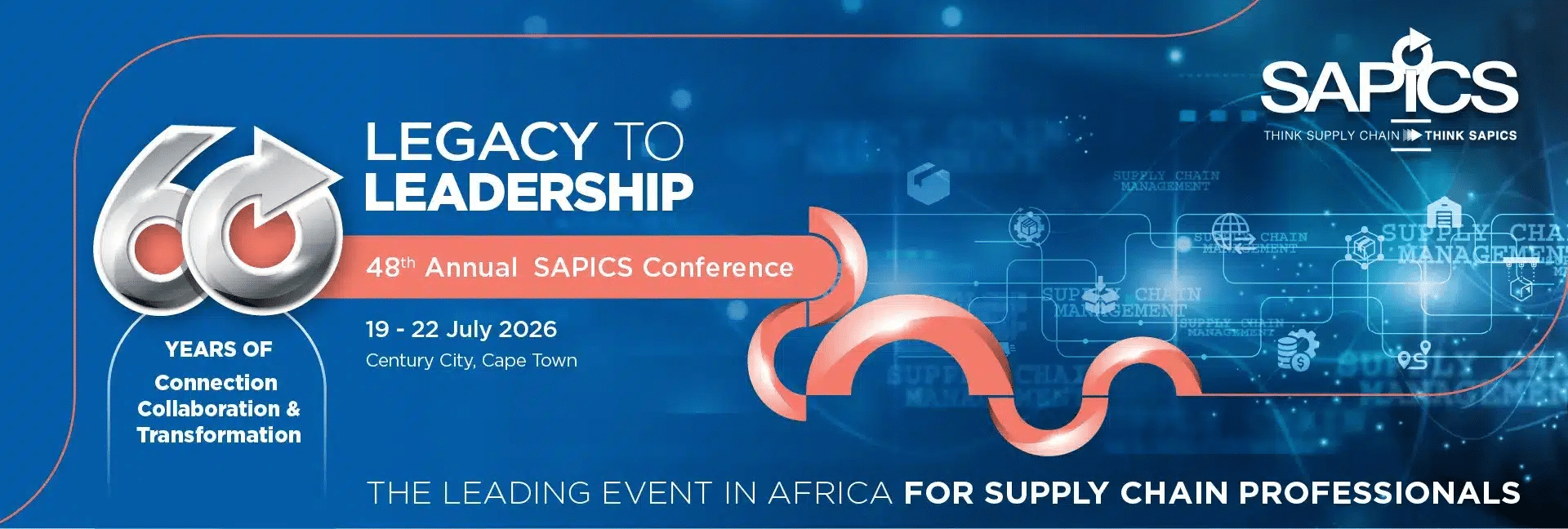
The 48th annual SAPICS Conference, held at the Century City Conference Centre in Cape Town from 19 to 22 July, carried more weight than most editions. It marked sixty years since the founding of SAPICS in 1966, and the theme, Legacy to Leadership: 60 Years of Connection, Collaboration and Transformation, was chosen deliberately.
SAPICS president Thato Moloi framed it as a call to action rather than a retrospective: in 2026, he said, the organisation was not remembering the past but shaping the future of supply chain excellence across the continent.
Four days of keynotes, panels and parallel streams, opened by Transnet’s Advocate Michelle Phillips and the AfCFTA secretariat’s Demitta Gyang and closed by industry leader Lebogang Letsoalo, gave that ambition real substance.
I presented on the Strategy, Resilience and Leadership stream on the first afternoon, with a session titled Resilience by Design: Rethinking How We Build Modern Supply Chains. The argument was straightforward. For most of the past few years, the operative question in supply chain planning has been when will things get back to normal?
This question assumes disruption is a detour and normal is the destination. The better question, and the one the session was built around, assumes the opposite: that disruption is now the operating environment and asks what supply chains must look like to keep functioning within it rather than recovering from it.
Resilience is no longer mainly about recovery after disruption. It is about designing supply chains that keep functioning while disruption is happening.
The session set out eight shockwaves that have shaped supply chains since 2020, from COVID-19 and the war in Ukraine to Red Sea rerouting, tariff volatility, fracturing of the Western bloc, deglobalisation and the arrival of agentic AI, and made the case that the danger lies not in any single one but in their simultaneity.
It argued, drawing on African conditions as the sharpest test of the thinking rather than a softer version of the global problem, for a shift from efficiency-first to certainty-first design.
And it introduced a resilience model built around a protected core, four protective layers and a set of measurable indicators resolving to a single Resilience Posture Score, the basis of a diagnostic instrument now being developed further through the Shockwave Economy research programme.
What key digital and circular economy trends emerged at the SAPICS 2026 conference?
Beyond my own session, the programme reflected a profession taking its own advice. Artificial intelligence and agentic systems featured heavily across the AI and Digital Technology stream, tempered usefully by speakers who cautioned against deploying technology on weak foundations.
Resilience appeared throughout, from real-world control tower case studies to sessions on organisational preparedness. Circular supply chains, ethical sourcing, public sector procurement reform, healthcare supply networks and the development of the next generation of talent all had prominent places, alongside a well-attended new addition, the SAPICS SME Pitch Parade, which gave emerging supply chain innovators a stage before a panel of judges in the closing session.
How do international conference networks drive academic-industry partnerships in supply chain research?
The most valuable part of the four days, though, was not on the programme at all.
Conversations over tea, in the exhibition hall and after sessions produced genuine connections with both local and international practitioners: logistics and retail executives from South African corporates, academics from European universities of applied sciences and delegates who had travelled from as far as the United States, the Netherlands and Canada to be in Cape Town.
Several of those conversations continued past the closing keynote, and two in particular have already turned into concrete opportunities.
I have been invited to present at the Smart Procurement World Indaba, South Africa’s leading procurement and inbound supply chain conference, which marks its own twentieth edition this September in Johannesburg.
A conversation with an academic colleague led to an invitation to present the resilience framework to industrial engineering students at another South African university, a welcome opportunity to take the thinking into an engineering audience rather than a purely managerial one.
Why is active industry engagement essential for the IMM Graduate School Centre for Research?
Conferences of this standing matter for a research portfolio still being built and for meaningful industry engagement. SAPICS placed the IMM Graduate School’s name alongside senior supply chain practitioners, and the two invitations that followed are a direct, practical return on that visibility.
Beyond the immediate industry engagement, the reception the model received, and the questions it prompted, are useful data points for the research itself: a live test of whether the thinking holds up in front of the people who would actually have to use it.
The conversations begun in Cape Town, particularly with the European academics working on adjacent resilience and circularity questions, are also the kind that tend to seed future collaboration. Sixty years on, SAPICS remains, on this evidence, exactly the kind of platform a research-active school should keep showing up to.
Frequently Asked Questions (FAQs)
What is the Resilience by Design supply chain framework?
The Resilience by Design framework is an operational strategy developed at the IMM Graduate School that assumes continuous disruption is the standard operating environment. Rather than focusing on post-disruption recovery, it builds protective architectural layers around a core network to maintain ongoing functionality during simultaneous macroeconomic shockwaves.
Why is certainty-first design replacing efficiency-first supply chain planning?
Certainty-first design prioritises operational continuity over minimal cost optimisation when managing volatile global trade networks. As simultaneous shockwaves like geopolitical conflicts and tariff volatility occur, efficiency-first models experience chronic failures. Certainty-first architecture ensures essential logistics functions survive unpredictable disruptions across Pan-African and international trade corridors.
How does agentic Artificial Intelligence (AI) impact modern supply chain resilience?
Agentic Artificial Intelligence (AI) introduces autonomous decision-making systems into supply chain control towers to predict and mitigate disruptions. However, experts at SAPICS 2026 emphasised that AI technologies must be deployed on sound operational foundations to prevent compounding existing logistics inefficiencies or structural governance vulnerabilities.
What is the Resilience Posture Score developed by the IMM Graduate School?
The Resilience Posture Score is a diagnostic instrument developed under the Shockwave Economy research programme at the IMM Graduate School. It evaluates measurable indicators across four protective supply chain layers and a protected core, delivering a single quantitative metric that assesses an organisation’s capacity to withstand disruptions.
How does African Continental Free Trade Area (AfCFTA) integration require resilient supply chains?
The African Continental Free Trade Area (AfCFTA) aims to establish a unified continental market, requiring robust logistics networks to facilitate borderless trade. Building resilient, certainty-first supply chain infrastructure enables African economies to absorb regional operational shocks, streamline cross-border freight movements, and enhance trade competitiveness across Southern Africa.
RESOURCES
48th Annual SAPICS Conference 2026 (Dates, Venue, Theme & 60th Anniversary)
https://www.sapics.org/news/dsv-sponsors-2026-sapics-conference
SAPICS Leadership (Thato Moloi, SAPICS President)
https://www.sapics.org/board/thato-moloi
https://www.sapics.org/news/moloi-named-president-supply-chain-industry-body-sapics
Author & Presenter (Dr Ernst van Biljon, Dean of Research, IMM Graduate School)
Referenced Event: Smart Procurement World Indaba 2026