
The “China Plus One” Strategy and What It Means for South Africa

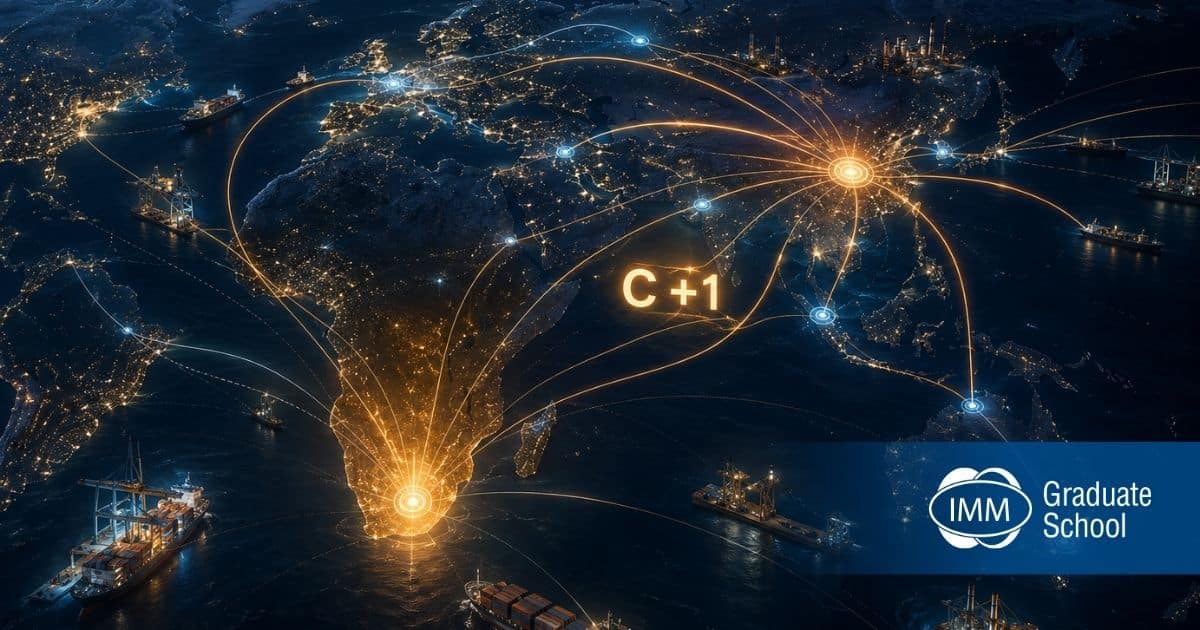
Global manufacturing is shifting. For decades, many companies built their supply chains around China’s scale, speed and cost advantages.
That model is now being reconsidered. That model is changing. The world’s biggest brands are spreading their operations across multiple countries, and they’re doing it deliberately. This is the China Plus One strategy, and for South Africa, it’s one of the more significant trade developments in recent history.
Supply Chain Management is the discipline that determines whether organisations can source reliably, move goods efficiently, manage risk intelligently, and compete across markets that span continents. In an economy like South Africa’s, positioned at the edge of a continental free trade area covering 1.4 billion people, those capabilities are not just operationally important. They are strategically critical.
Why the world’s biggest brands are rethinking where they produce things
China Plus One, also known as C +1, isn’t complicated. A company keeps its Chinese manufacturing operations running and adds at least one alternative production or sourcing location on top of it. The goal is simple: reduce overdependence on one production base while building greater resilience across the supply chain.
What changed? COVID-19 made the risk impossible to ignore. When Chinese factories went dark in 2020, companies found out they had no backup plan. Automotive plants stalled. Pharmaceutical companies couldn’t source the resources they needed. Retail brands ran out of stock with no alternative supplier in sight. That kind of exposure doesn’t get forgotten in a boardroom. The response is not simply to move production elsewhere. It is to build a more resilient supply chain diversification strategy, supported by the right data, supplier relationships, logistics capability and risk planning.
Trade tariffs added a financial argument on top of the risk argument. ESG reporting pushed brands to show geographic diversity in their supply chains. Chinese labour costs have been climbing for years, the cost gap that made China untouchable has been closing. Electronics, pharmaceuticals, automotive components, apparel, consumer goods, these are the sectors moving fastest, and they’re the same sectors where South Africa already has a footing. This creates a potential opening for South African manufacturing investment, provided the country can address the operational, infrastructure and skills requirements that global manufacturers will expect.
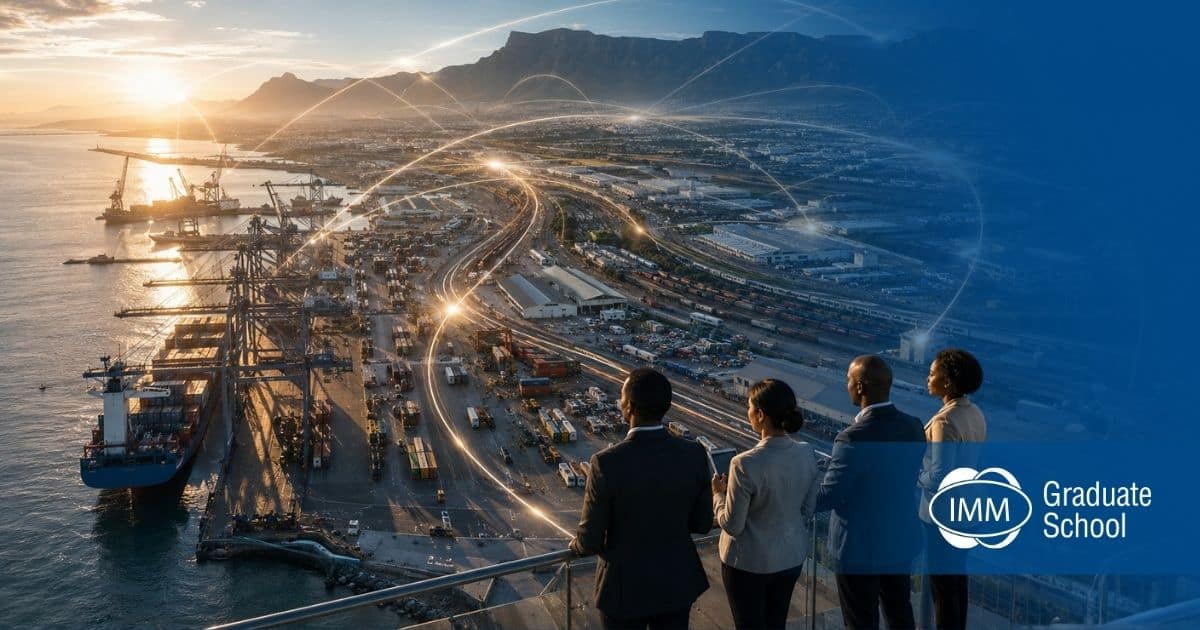
South Africa’s position in the shifting global supply chain map
Ask anyone where C+1 investment is going and you’ll hear the same names: Vietnam, India, Indonesia, Mexico. South Africa does not always feature prominently in this conversation. Part of that is an economic and infrastructure challenge, but part of it is also a narrative challenge.
The country’s position at the southern tip of Africa puts it across key east-west shipping routes and at the edge of a continental market of over 1.4 billion people. The African Continental Free Trade Area (AfCFTA) gives South Africa a framework to serve as a distribution and logistics hub for the continent, not a standalone production site. BMW, Mercedes-Benz, and Toyota manufacture here already. The automotive base alone signals that South Africa isn’t starting from zero. An English-language legal system aligned with international trade norms reduces the entry barriers for multinationals considerably.
The constraints are real, and ignoring them doesn’t help anyone. Durban’s container port has struggled in global rankings in recent years, a direct problem for a country trying to position itself as a logistics hub. Load shedding is an operational risk that manufacturers can’t ignore. There is also a skills challenge. Supply chains operating at this level need professionals with depth in procurement, logistics, trade compliance, analytics and risk management. Building that capability is where specialist supply chain education becomes commercially important.
For South Africa, the China Plus One strategy is not only a manufacturing conversation. It is a capability conversation. Global investors will not only look at infrastructure, incentives, and market access. They will also look at whether the country has the procurement, logistics, trade, and risk-management expertise needed to support complex regional and international supply chains.
A skills gap means demand is outrunning supply. For someone building a career in this field, that’s a position worth being in.

The skills South Africa needs to capitalise on this shift
What does a business need to attract and manage global supply chain investment? Professionals who can operate at an international level, specialists with the technical, commercial and strategic judgement to manage complexity.
A procurement professional who understands global sourcing, trade compliance, and multi-geographic supplier relationships brings something different to an organisation than someone managing a local vendor list. A logistics manager who works across multi-modal freight, port operations, and cross-border trade within AfCFTA is a different hire entirely. A supply chain analyst who builds risk models and contingency frameworks is the person companies are competing for right now.
These aren’t hypothetical roles. They’re the roles South African businesses need to fill as global supply chain diversification creates demand on the continent.
IMM Graduate School’s supply chain qualifications are designed to build this capability at different stages of professional growth. The Higher Certificate in Supply Chain Management creates an entry point into the field. The BCom in International Supply Chain Management builds a degree-level foundation with a global trade lens. The BCom Honours and MCom in Supply Chain Management support working professionals who need the strategic depth required for senior and specialist roles. Where do your current skills sit against that picture?

Supply chain is no longer a back-office function
COVID-19. The Suez Canal blockage. Russia-Ukraine trade disruptions. Each of these events put supply chain on the agenda of executive teams that were paying attention. Companies that treated supply chain only as a cost to minimise were exposed when disruption hit. Companies that invested in supply chain as a strategic function, with the people, processes, systems and networks to absorb disruption, were better positioned to recover.
South Africa’s ability to attract manufacturing investment, compete for a role within AfCFTA trade flows, and participate in the supply chain diversification that C+1 is driving comes back to one thing: professionals who know how to operate at that level. It’s an economic argument as much as a career one.
Supply chain management sits at the intersection of global trade, technology, and business strategy. If you’re thinking about where to build something with long-term relevance to the African economy, this field is worth taking seriously.
Where to start
The C+1 shift is moving supply chain investment around the world. South Africa has a genuine case to attract some of it, but that case depends on the people behind it.
IMM Graduate School offers a qualification for every stage of that journey:
- Higher Certificate in Supply Chain Management, for those entering the field or making a career change.
- BCom in International Supply Chain Management, for students who want a degree with an international foundation.
- BCom Honours / MCom in Supply Chain Management, for professionals stepping into strategic leadership.
Wherever you are in your career, the opportunity is to build the supply chain capability South Africa will need to compete in a changing global economy.
Frequently Asked Questions: Global Supply Chain Shifts & South Africa’s Role
1. What is the “China Plus One” strategy in global manufacturing?
The “China Plus One” (also known as C+1) strategy is a business diversification model where multinational corporations expand their manufacturing networks beyond China. While maintaining their existing Chinese production operations, companies set up at least one alternative manufacturing or sourcing base in another country. This deliberate shift aims to reduce overdependence on a single geographic location, mitigate operational risks, and lower exposure to trade tariffs and supply chain disruptions.
2. Why are multinational brands actively diversifying their production networks away from a single base?
Global brands are diversifying their production networks due to massive boardroom lessons learned from the COVID-19 pandemic, severe port bottlenecks, and geopolitical trade disruptions. Furthermore, climbing labour costs within China have shrunk the historical cost gap, whilst modern corporate environmental, social, and governance (ESG) reporting criteria push organisations to demonstrate greater geographic resilience and diversity across their end-to-end supply chains.
3. What strategic advantages does South Africa offer for global supply chain diversification?
South Africa offers a uniquely strategic location at the southern tip of Africa, sitting across critical east-west maritime shipping routes and serving as a natural logistical hub for the African Continental Free Trade Area (AfCFTA), which encompasses over 1.4 billion people. The country features a well-established automotive manufacturing foundation supported by global giants, alongside an English-language legal and commercial framework aligned with international trade norms.
4. How does the IMM Graduate School prepare professionals to capitalise on the “China Plus One” shift?
The IMM Graduate School prepares professionals by delivering specialised, career-focused qualifications that address the specific skills gaps highlighted by global supply chain shifts. The institution trains individuals in international trade compliance, multi-geographic supplier relationships, cross-border freight operations, and advanced risk modelling, ensuring South African businesses possess the human capability needed to manage complex international investments.
5. Why is supply chain management now considered a core executive function rather than a back-office task?
Recent global disruptions—such as international blockages, raw material shortages, and health crises—have proven that treating supply chain management merely as a cost-cutting back-office function leaves a business deeply vulnerable. Corporate executive teams now recognise supply chain planning as a vital strategic pillar that directly impacts business continuity, market competitiveness, and organizational resilience.
6. What specialized supply chain qualifications are available through the IMM Graduate School?
The IMM Graduate School provides a comprehensive academic articulation pathway tailored for every stage of professional development. This includes the Higher Certificate in Supply Chain Management for entry-level practitioners, the BCom in International Supply Chain Management for a degree-level foundation with a global trade lens, and advanced BCom Honours and MCom programmes designed for professionals stepping into strategic corporate leadership roles.