
Birth of the Cold Chain? – The Ice Trade in the 1800s and Its Influence on Modern Supply Chain
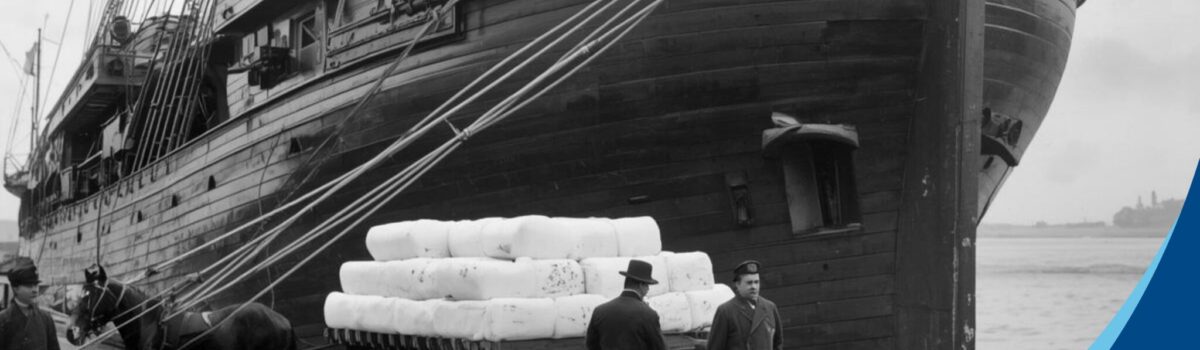
What was life like before refrigerators existed? How was food kept cold during the heat? It all started with ice.
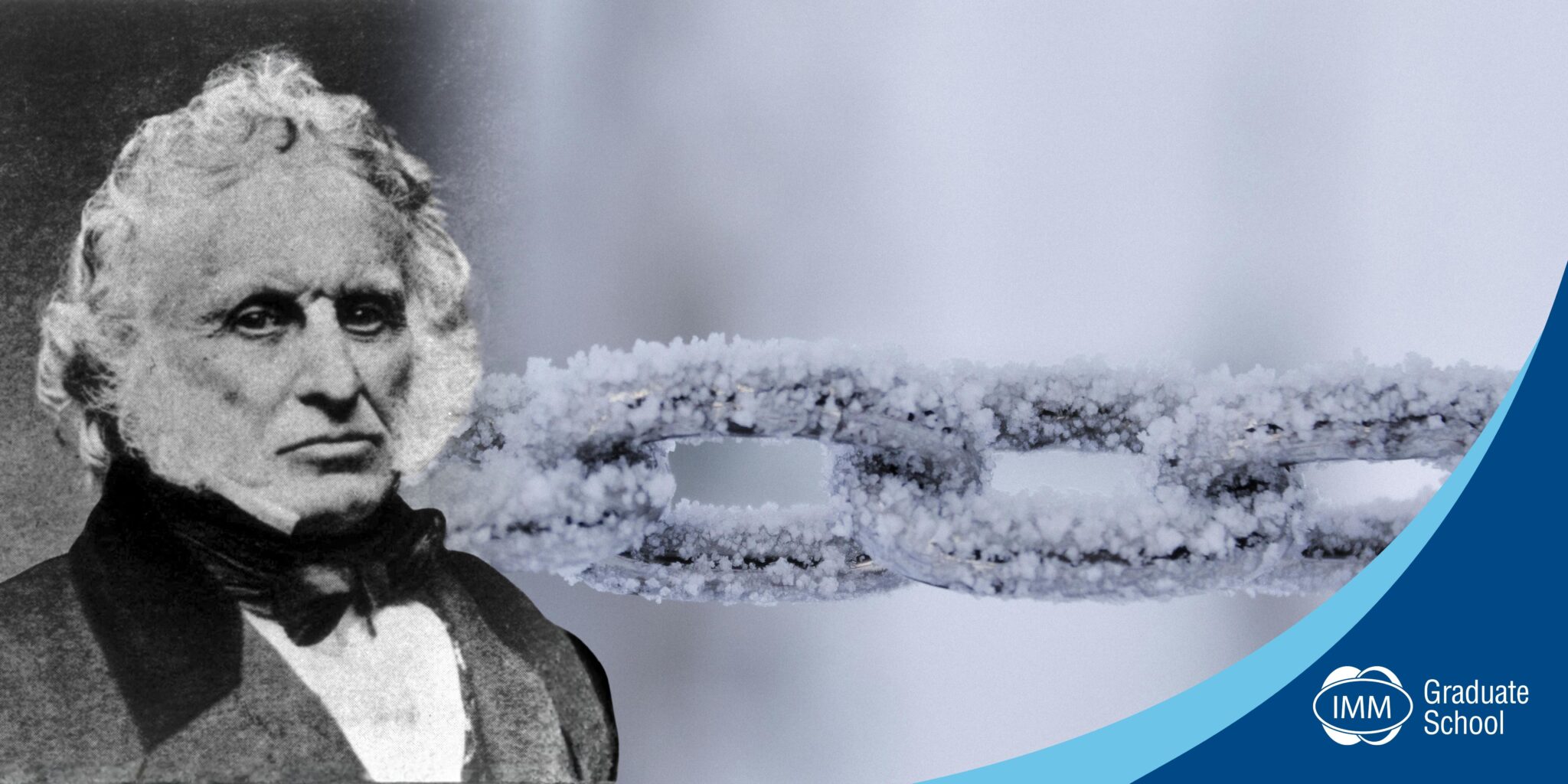
In 1806, Frederic Tudor attempted to sell ice to hot, faraway countries. Many mocked the idea. One critic called it “the vagary of a disordered brain.”
His first shipment to Martinique melted on the voyage. Most traders would have stopped, but Tudor was a determined man.
This decision started what we now know as the ice trade, a global supply chain built around a product that melts. The product itself was simple: frozen water.
The challenge lay not in the ice itself, but in the system required to move it safely.
Ice melts. Long sea routes increase loss. Warm ports slow handling. Storage breaks down. Demand did not yet exist.
The ice trade demonstrated the key principles of modern cold chains: temperature-sensitive goods management, preservation infrastructure, logistics coordination, and market creation. Ice had to be harvested, stored, and transported carefully. Icehouses and insulated shipping created the earliest cold storage systems.
Harvesting, shipping, and delivery required timing, scheduling, and operational planning. Entrepreneurs also had to educate the market to create demand, linking supply chain efficiency with customer behaviour.
While mechanical refrigeration came later, the ice trade established the first global system for moving perishable goods over long distances.
This makes it both accurate and insightful to describe the ice trade as the birth of the cold chain, connecting 19th-century logistics innovation to the foundation of modern supply chain practice.
So, the question became: how do you build a global business around a product that is constantly disappearing?
The answer lies in logistics, storage, market creation, and damage limitation, the very principles that form the backbone of today’s cold chains.
The History of The Ice Trade
A Risky Export Idea
The history of the ice trade begins with Tudor’s early shipments from Massachusetts ponds. His first voyages failed. The ice melted before reaching customers. Tudor studied the problem. The solution wasn’t better ice, but better systems.
Icehouses were built at harvest points and destination ports. Ship holds were packed with sawdust. Ice blocks were stacked tightly to reduce airflow. Losses continued, yet the trade survived.
By the 1830s, New England’s ice was travelling far beyond local markets:
- The Caribbean
- The American South
- India
- China
According to the Boston University research journal, The Brink, in 1847 alone, 353 vessels left Boston carrying ice, illustrating how a once-strange trade had become a growing export industry.
Logistics Behind The Ice Trade
Moving ice across oceans required strict coordination. Each stage of the supply chain had to operate as a network of controlled compromise.
Harvesting the ice
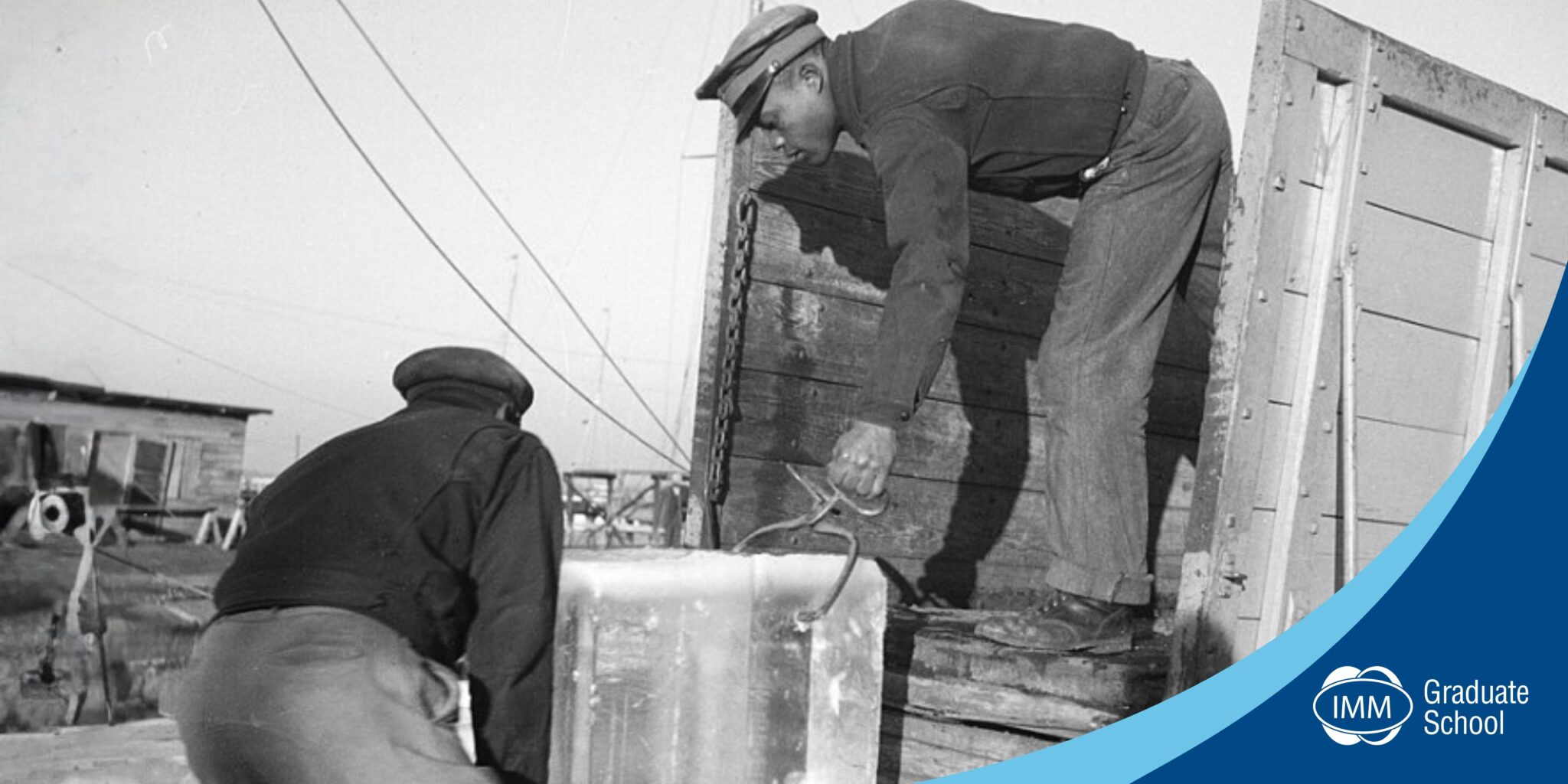
- Each winter, teams cut ice from frozen ponds using ploughs and saws.
- Horse-drawn equipment moved blocks across the surface.
- The blocks then travelled through channels into nearby icehouses.
- Missing the winter harvest threatened the yearly supply, highlighting the first lesson in timing and seasonal planning.
Storage before shipment
- Icehouses stored thousands of tons of ice, insulated with sawdust.
- These buildings formed the backbone of the early cold chain, keeping ice preserved until summer transport.
- Without these structures, the ice trade would not have survived.
Transport across oceans
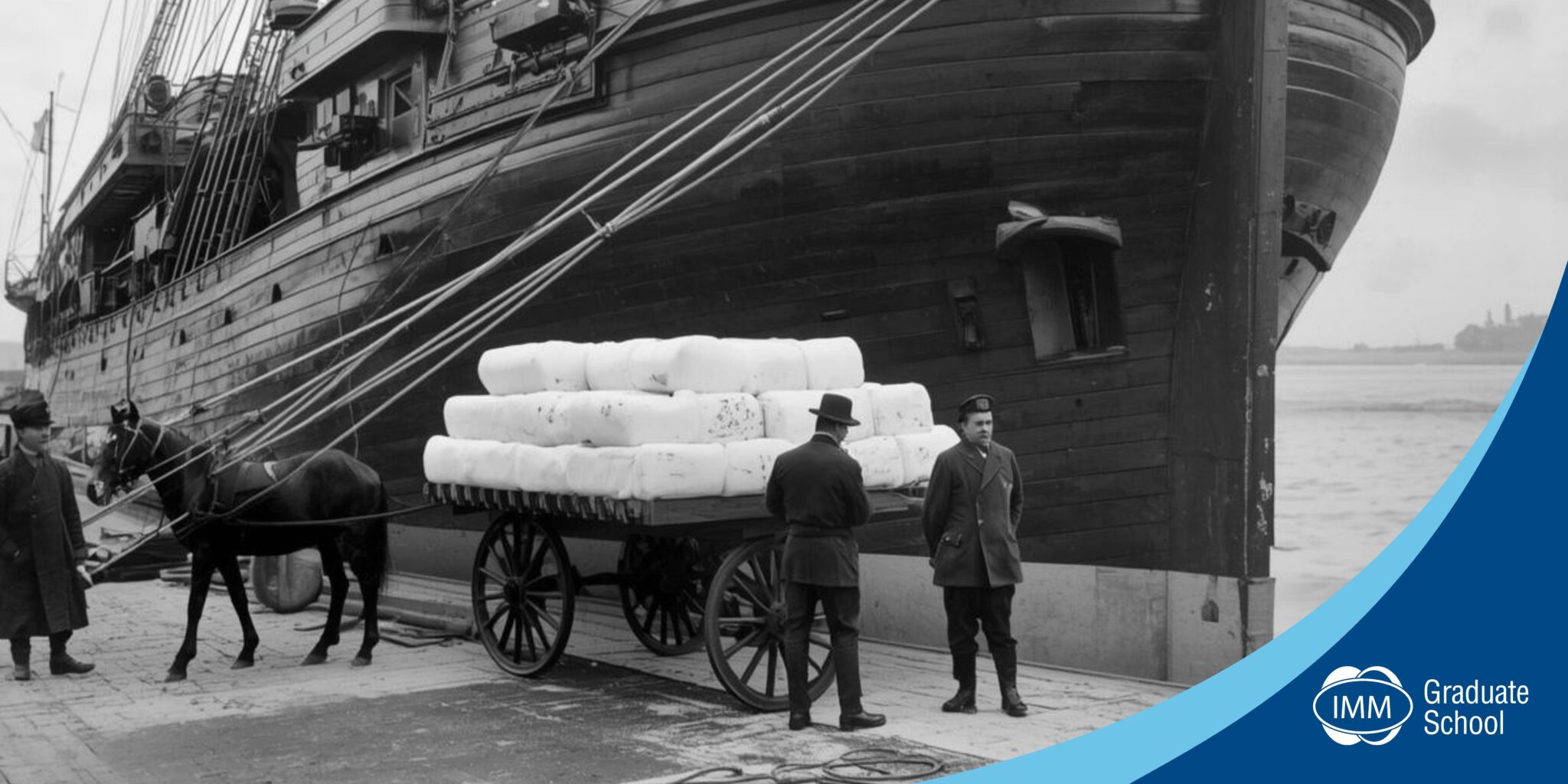
- Ships loaded ice in dense stacks with sawdust filling the gaps, a form of damage limitation against the inevitable melting.
- Losses were expected and factored into pricing.
- One Boston shipment left port with 502 tons of ice and arrived in London 51 days later with 326 tons remaining.
- The system treated loss as an operational line item, an early example of industrialised loss.
Creating Demand for Ice
Transport alone did not build the industry. Many buyers had never used ice before. Entrepreneurs had to teach the market. Ice became positioned as:
- A tool for food preservation
- A medical necessity
- A luxury for drinks and brewing
Demand slowly grew, showing the power of market creation alongside logistics.
Wenham Lake Ice and Early Branding
The Wenham Lake Ice Company, founded in 1842-1843, demonstrated how brand management integrates with supply chain strategy.
Their London shop displayed large blocks of ice and held public demonstrations of clarity. Soon, the product gained a royal warrant from Queen Victoria. A commodity had become a recognised brand.
Ice Delivery and Urban Distribution
Imported ice had to reach buyers in cities. This required a last-mile distribution network. Urban icehouses stored shipments, and delivery wagons carried blocks to homes, hotels, breweries, and hospitals. Regular delivery routes made ice a daily necessity and integrated cold storage into urban life.
The Ice Trade and the Rise of Cold Supply Chains
The ice trade influenced multiple industries. By the 1860s, railways used ice-cooled cars to transport beef from Chicago and Cincinnati to eastern cities.
Cold storage reshaped sectors such as:
- Meat processing
- Fishing
- Brewing
- Urban food supply
The ice trade represents the first practical global cold chain, proving that perishable goods could move across continents when logistics, storage, and distribution worked together.
Lessons from The Ice Trade
- Infrastructure creates trade – Icehouses, ships, and storage networks made long-distance transport and delivery possible.
- Loss must be measured and priced – Melting was expected; traders planned accordingly.
- Marketing builds demand – Customers had to learn why ice mattered.
- Distribution matters as much as production – Ice delivery networks connected ports to homes.
Why The Ice Trade Still Matters
Mechanical refrigeration replaced natural ice in the late 19th century. Yet the model remains relevant.
Modern cold chains in food logistics, pharmaceuticals, and global supply networks follow the same logic:
- Move something fragile across distance
- Accept that some loss will occur
- Build systems to manage it
- Deliver value reliably
The principles demonstrated by the ice trade, logistics planning, storage infrastructure, loss management, and market development, are exactly the skills that underpin today’s supply chain and marketing industries.
Programmes such as the Supply Chain and Marketing qualifications at the IMM Graduate School build on this foundation, equipping aspiring professionals with the knowledge to design, manage, and optimise modern global supply networks.
The ice trade may have begun with frozen water, but its lessons remain a blueprint for managing perishable goods and customer demand in today’s complex supply chains.