
Email marketing strategy in South Africa: Why owned media is the smartest channel investment you can make

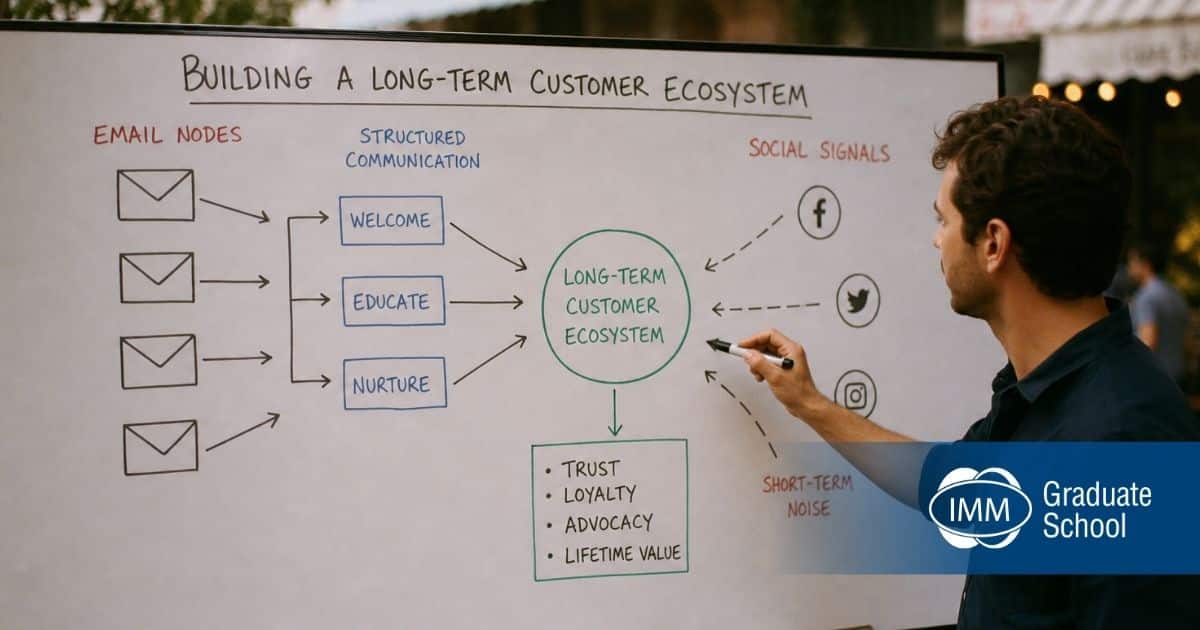
Picture a brand spending three years building a Facebook following of 50,000 people. Consistent content. Real community. Real budget behind every campaign. Then the algorithm changes. Organic reach drops, and the brand has to pay to reach the same audience it spent years building.
This is not a theory. It has happened across Facebook, Instagram, LinkedIn, and X. It will keep happening because those platforms do not belong to brands. The followers sit on borrowed infrastructure. The rules change without warning. The conversation around email marketing strategy in South Africa needs to begin here because every channel decision flows from this one reality.
You do not own your followers. And for brands building long-term growth, that creates a problem few businesses take seriously enough.
Why marketing capability is a commercial advantage
Marketing is not just a department or a line item in a budget. It’s the function that shapes how an organisation finds, attracts, and retains customers. In a market like South Africa, where consumer behaviour spans vast income brackets, languages, digital access levels, and cultural contexts, the ability to understand and reach an audience effectively is one of the most valuable capabilities a business can develop.
The channel question, owned versus rented media, is really a question about marketing judgement. Organisations that treat channel decisions as tactical rather than strategic tend to find themselves exposed when platforms shift, algorithms change, or audiences move. This is the level of marketing judgement IMM Graduate School develops: the ability to look beyond short-term reach and make strategic decisions about audience ownership, channel investment, and long-term brand value. This is especially important in African markets, where audience behaviour is shaped by trust, access, affordability, community influence, and mobile-first communication. Marketers need more than channel knowledge. They need the judgement to understand how people actually engage, decide, and respond.
You don’t own your followers, and that’s a strategic vulnerability
Before another rand is spent on content, marketers need to understand one of the most important strategic distinctions in modern media planning: owned media versus rented media. Rented media is any channel where a third party controls access to your audience. Social platforms are the clearest example. Your followers live on Instagram’s infrastructure, under its algorithm, subject to its rules. You are a tenant, not an owner.
Email works differently. An email list is an owned asset. No social algorithm decides whether your message is visible. If 10,000 subscribers are on your list and your campaign is properly delivered, your message has a direct route to those inboxes. This is where the comparison between email marketing and social media engagement becomes more than a performance metric. It becomes a question of control. For South African SMEs and growing brands, this difference carries weight. Many businesses have invested heavily in social growth without asking a difficult question: what happens when the platform changes again? What happens when reach drops further? What happens when audiences move elsewhere?
Those shifts are already happening. The issue is not social media itself. Brands still need social platforms for visibility, awareness, and community. The issue appears when an entire strategy depends on channels a business does not control. It also forces a more disciplined investment conversation: what should sit in owned media, what should be supported through paid media, and what can be amplified through earned media? This is the kind of question IMM Graduate School trains marketers to ask before a brief gets written, not after a campaign underperforms. Email marketing ROI should not be treated as a post-campaign reporting exercise only. It should inform planning, segmentation, content strategy and future investment decisions.

Why email has kept delivering while social reach shrinks
The inbox creates a different relationship between brands and audiences. A person scrolling through social media moves past content passively. An email subscriber made a decision to hear from you. That permission changes engagement.
Email continues outperforming many social channels across direct communication metrics like open rates, click-through rates, and conversions for similar campaigns. People treat newsletters differently because newsletters enter a space users check with intent.
The format has evolved, too. Platforms like Substack gave brands and individuals the tools to build readerships instead of simple mailing lists. South African platforms like Everlytic made large-scale email marketing accessible for local businesses. The strongest newsletters now operate like publications. Readers return because the content serves a purpose beyond promotion.
The South African context sharpens this further. Mobile-first consumption, data cost sensitivity and varied digital access mean email, when designed well, remains one of the most accessible direct channels in the market. A well-timed, mobile-optimised email can reach a prospective customer on a commute, at work, or between daily responsibilities without depending on a social platform’s algorithm.
What good email marketing strategy actually looks like
Most organisations talk about “doing email marketing.” Fewer build a real strategy behind it. Here is what the difference looks like across four areas.
List building
Your list is only valuable if the people on it want to hear from you. Effective list building uses value exchange, a free resource, event registration, gated content, rather than harvesting addresses from every contact form you have touched. A Cape Town fashion retailer offering a style guide PDF. A B2B company gating industry research. An institution inviting prospective students to an online open day. The format changes depending on the business, though the principle stays the same.
Segmentation
Once you have a list, treating everyone on it the same way wastes it. A Johannesburg retailer sending the same email to a first-time buyer and a loyal repeat customer is leaving conversion on the table. Segmentation, dividing subscribers by behaviour, interest, or buying stage, is where email stops being a broadcast tool and becomes a CRM function. This is applied audience strategy, and it sits directly inside the skills IMM Graduate School’s marketing programmes develop.
Consistency
The brands that build durable email audiences treat their newsletter like a publication, not a campaign. Campaigns are occasional. Publications have cadence, voice, and editorial purpose beyond the immediate promotional objective. Commit to a rhythm and give subscribers something genuinely useful every time. When emails become purely promotional, unsubscribe rates will skyrocket.
Measurement
Email is one of the most measurable channels available, provided you know what to track: open rates, click-through rates, list growth rate, unsubscribe rate, and revenue attribution. Unlike social, where tracing impact is murky, email creates a clear line between campaign and outcome. Setting up that tracking correctly from the start is a media planning competency, not a technical one.

What this means for marketers building their careers in SA
Here is the career opportunity that does not get named often enough: most South African organisations have under-invested in email strategy, list quality, and owned content infrastructure. Genuine competency here is rare.
A marketer who walks into a brief and immediately asks who controls the audience, what happens if reach changes, and how to build a direct relationship at scale is thinking at a level that most social media managers are not. That is a structural advantage, and it is increasingly expected in brand strategy, content, and CRM roles across the SA market.
IMM Graduate School’s BBA in Marketing Management and Postgraduate Diploma in Marketing Management are built around this kind of applied, strategic thinking. They help students and working professionals move beyond campaign execution towards the channel strategy, audience insight and commercial judgement needed to build long-term brand value.

Build what you own
The shift toward owned media is a structural correction, not a trend. Brands that leaned entirely on rented platforms are now paying to reach audiences they already built. The time to build something the algorithm cannot touch is before you need it.
If you are a student building your marketing foundation or a practitioner reassessing your channel mix, explore how IMM Graduate School can develop your strategic thinking with a BBA in Marketing Management or a Postgraduate Diploma in Marketing Management qualification.
The marketers who lead in the next decade will not simply be the ones who run the most campaigns. They will be the ones who understand audience ownership, build infrastructure that compounds over time, and make strategic channel decisions before those decisions are forced on them.