
SAPHE 2025 Conference: Charting the Future of Higher Education in South Africa

The South African Private Higher Education (SAPHE) 2025 Conference brought together thought leaders, educators, and policymakers to explore the evolving landscape of higher education.
Over two days, delegates engaged in powerful discussions about collaboration, innovation, and responsible leadership, all aimed at advancing education in South Africa.
IMM Graduate School Showcases Innovation in Online Assessment
Dr Valentine Muradzikwa, a head lecturer at the IMM Graduate School, delivered a presentation titled Implementing Variable Templates in Numeracy-Based Online Assessments, based on research authored by Riana Prins, the IMM Graduate School’s Head of Assessments and Learning Management System.
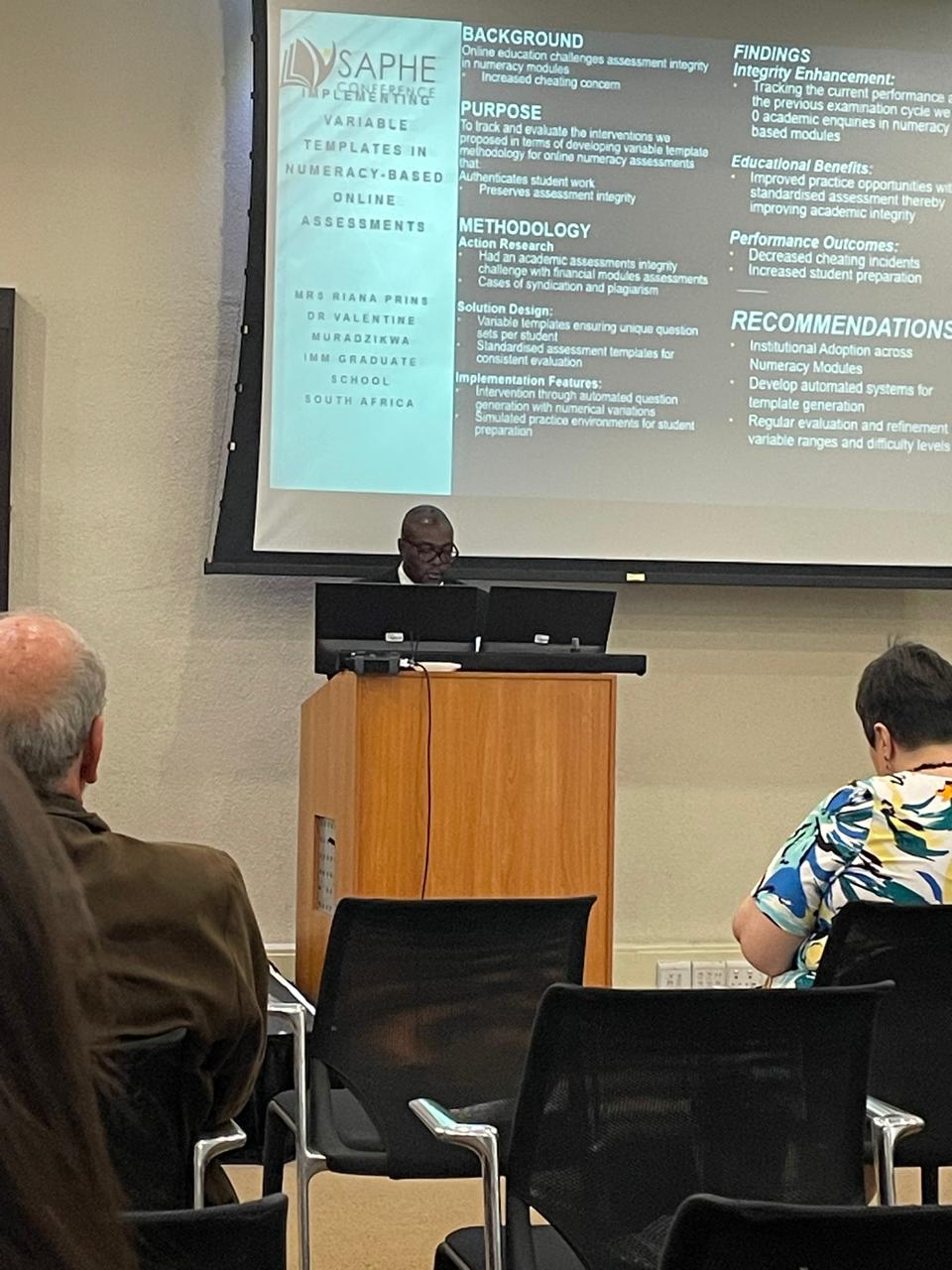
Dr Valentine Muradzwika, Numeracy Modules Coordinator at the IMM Graduate School, presents research on implementing variable templates in numeracy-based online assessments. (Photo supplied)
Reflecting on the presentation, Dr Muradzwika said:
“[It offered] an insight into the changes that online assessments have brought to the education field. It reviewed the interventions proposed by the IMM Graduate School for developing variable templates to address the problem of cheating in assessments. It was an eye-opening experience as other private higher education institutions seem to be struggling with the issues of cheating in online assessments.”
His presentation highlighted the IMM Graduate School’s commitment to maintaining academic integrity and advancing digital innovation in education through practical, research-driven solutions.
Dr Muradzwika’s contribution fit in well for a conference rich in forward-thinking dialogue, with fellow speakers and panellists examining how innovation, collaboration, and ethical leadership can shape the future of South Africa’s higher education landscape.
Day 1: Building Bridges and Envisioning Futures
The conference opened with a compelling keynote by Mr Edward Kieswetter, Commissioner of the South African Revenue Service (SARS). He challenged delegates to consider the broader role of higher education in fostering ethical leadership, accountability, and socio-economic transformation.
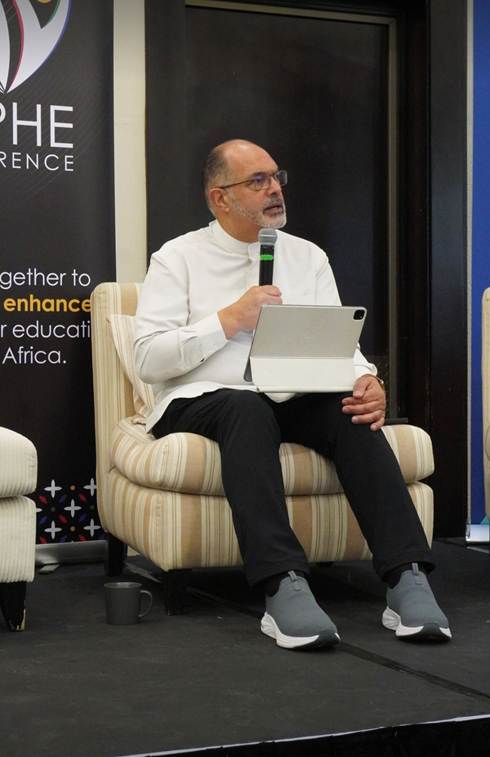
Mr Edward Kieswetter, Commissioner of the South African Revenue Service (SARS), addressing delegates on ethical leadership and accountability in higher education. (Photo supplied)
His central message resonated strongly: institutional purpose must align with national development goals in a world shaped by emerging technologies and artificial intelligence.
A thought-provoking session titled The Future of Private Higher Education: Opportunities and Challenges featured panellists Prof Divya Singh (Chief Academic Officer, Stadio Higher Education), Helen Buhrs (CEO, Inscape), Nadia Starr (CEO, South African Qualifications Authority – SAQA), and Peter Tabot Ayuk (Executive Dean, Tsiba Business School).
Their discussion focused on digital transformation, quality assurance, equitable access, and student-centred learning. The session underscored that innovation, agility, and collaboration are essential to ensuring private higher education remains relevant and impactful.
Mahlubi Chief Mabizela, USAf Director of Operations and Sector Support, delivered another keynote on Collaboration Between the Public and Private Higher Education Sectors to Enhance Outcomes in South Africa.
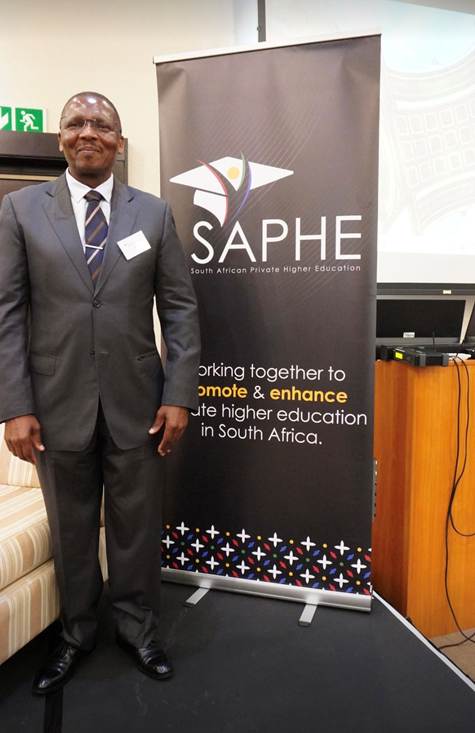
Mr Mahlubi Chief Mabizela, USAf Director of Operations and Sector Support, delivered his keynote on collaboration between public and private higher education sectors. (Photo supplied)
He emphasised the importance of partnership, policy alignment, and mutual trust as the foundation for system-wide improvement, reminding delegates that the strength of South Africa’s higher education ecosystem depends on how well stakeholders work together to expand access, quality, and innovation.
Day 2: Embracing Artificial Intelligence and Responsible Leadership
The second day of the conference continued the momentum with a focused panel discussion on Artificial Intelligence: Opportunities and Challenges in Higher Education, facilitated by Prof Benjamin Anderson (Co-founder and Executive Director, Da Vinci Institute).
Panel members Prof Cobus Oosthuizen (Dean of Postgraduate Studies, Boston City Campus), Dr Allen Mutono (Da Vinci Institute alumnus), and M Hoosen Essof (Head: Innovation and Student Experience, Regent Business School) explored the intersection of technology, ethics, and pedagogy.
The discussion examined how AI can enhance access, improve quality, and enrich the student experience, while still preserving the human essence of learning. This conversation is particularly vital for private higher education institutions striving to lead responsibly in the AI era.
Looking Ahead: A Shared Vision for Transformation
The SAPHE 2025 Conference reinforced a clear message: the future of higher education in South Africa depends on bold collaboration, ethical innovation, and a steadfast commitment to quality and access.
As institutions adapt to technological advances and evolving student needs, the frameworks and conversations initiated at this conference will help guide meaningful transformation across the sector.
The IMM Graduate School once again demonstrated its thought leadership and commitment to innovation at the SAPHE 2025 Conference.
Driving Innovation and Integrity in Higher Education Through Research and Practice
Through Dr Valentine Muradzwika’s presentation on variable templates in numeracy-based online assessments based on research by the IMM Graduate School, our Centre for Research showcased how research-driven solutions can enhance academic integrity while leveraging technology to improve learning outcomes.
By participating in discussions on AI, digital transformation, and responsible leadership, the IMM Graduate School highlighted the very principles that underpin its programmes: practical, industry-aligned education, ethical innovation, and student-centred learning. This active engagement reinforces the School’s mission to prepare graduates who are not only knowledgeable but also capable of shaping the future of South African higher education and the industries they serve.