
What Productivity Leadership Should Look Like in 2025

It’s 2025, and we’re still rewarding exhaustion like it’s a badge of honour. The inbox zero race. The back-to-back Zooms. The 10-hour “power days” fuelled by caffeine and cortisol. Somewhere along the way, productivity became synonymous with worth. And now? It’s costing us our best people.
Top performers aren’t leaving because they’re lazy. They’re leaving because they’re done being treated like machines. The toxic legacy of hustle culture, glorifying overwork, valuing people only for their output, and treating rest as weakness, has created a workplace epidemic: burnout masquerading as ambition.
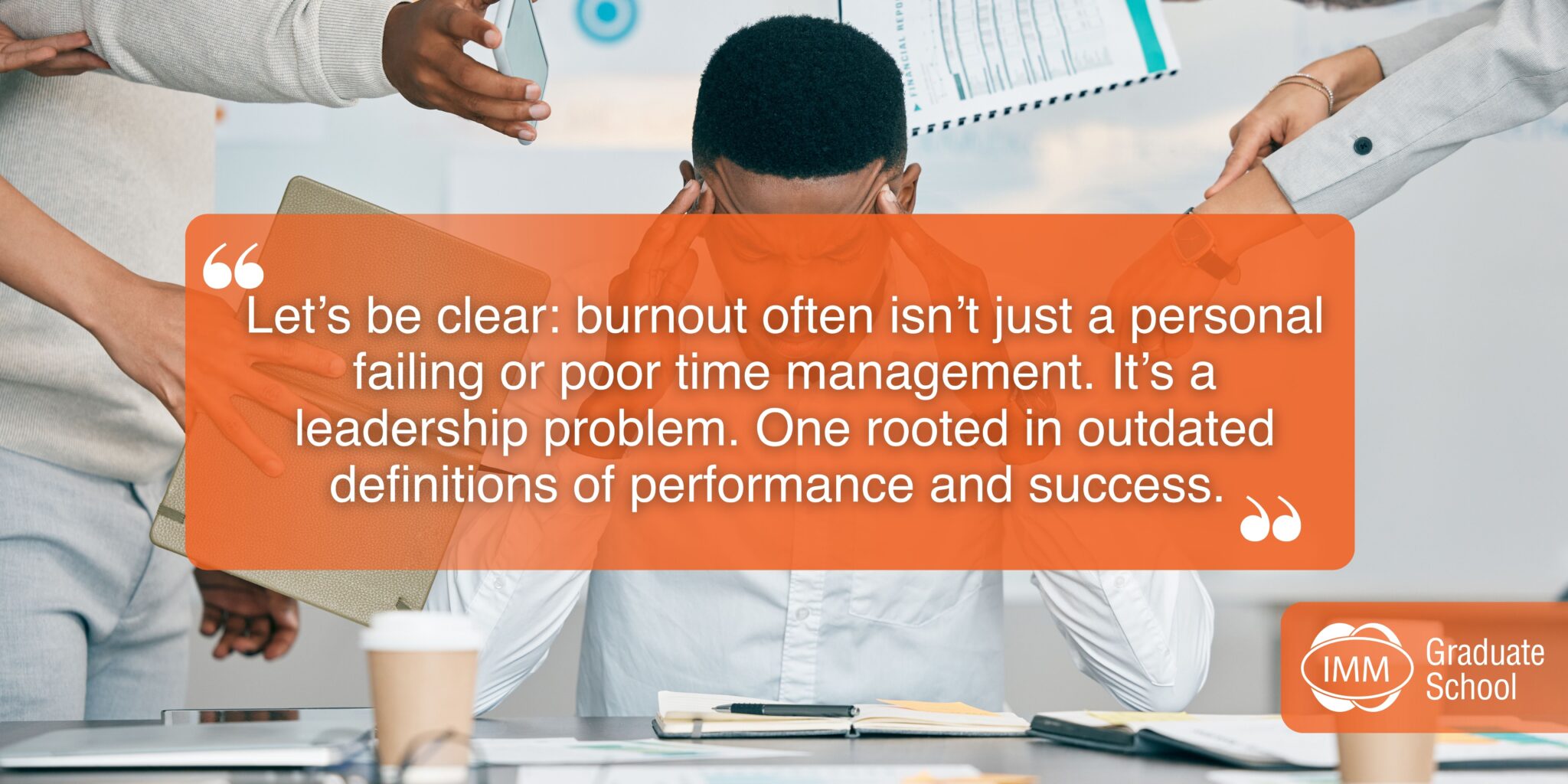
Let’s be clear: burnout often isn’t just a personal failing or poor time management. It’s a leadership problem. One rooted in outdated definitions of performance and success.
In today’s world, where digital technologies power the economy, humans are reclaiming centre stage from the machine-dominated eras of the past. Traditional measures of productivity – like hours worked or inbox activity – no longer reflect the real value we contribute to our work and lives. Focusing narrowly on efficiency can harm us more than it helps in the long run; it blinds us to the hidden toll it takes. Slack’s Workforce Index researched more than 10,000 desk workers around the globe and found that “employees who feel obligated to work after hours register 20% lower productivity scores.” Stifled creativity and well-being are sacrificed in pursuit of relentless busyness, while innovation struggles to breathe under this weight. Real leadership in 2025 demands a reset.
It starts with this radical idea: your team’s energy is more valuable than their time. If you want long-term performance, invest in sustainable pace, not unsustainable pressure.
Modern leaders are trading control for trust. They’re building cultures where boundaries are respected, where “off” is truly off, and where well-being is not a perk but a performance strategy. They’re asking why work gets done, not just how fast. And they’re brave enough to prioritise quality over quantity, even if it means redefining success.

Here’s what that looks like in practice:
- Redesign goals around impact, not busyness. Fewer KPIs, deeper alignment.
- Normalise rest as a productivity tool. Schedule thinking time like you schedule meetings.
- Reward curiosity over compliance. Innovation comes from permission to question, not pressure to perform.
- Model boundaries. If your team sees you answering emails at midnight, they’ll think they should too.
Real leadership isn’t about driving harder. It’s about leading better. To build organisations that thrive – not just survive – we must prioritise human-centric approaches over empty, hustle-driven catchphrases.
Ready to Lead the Future of Work?
If this vision of leadership resonates with you, one rooted in real impact, not just relentless output, then IMM Graduate School can help you equip yourself with the knowledge and skills to lead change. We offer a wide range of programmes that empower you to become a future-forward leader in today’s evolving workplace.
Explore IMM Graduate School’s offerings and find the qualification that will help you lead with empathy, create positive impact, and thrive in the future of work.

Conclusion
In 2025, the leaders who win won’t be the ones who pushed the hardest. They’ll be the ones who know when to pause, protect, and prioritise people over performance metrics. The future of work belongs to the managers who choose humanity over hustle.
It’s time to stop burning out your best and start building something better.