- Qualifications
- 2026 Fee Structure
- 2025 Fee Structure
- Marketing Qualifications
- Higher Certificate in Marketing
- Diploma in Marketing Management
- BBA in Marketing Management
- BCom in Marketing and Management Science
- BCom Honours in Marketing Management
- Postgraduate Diploma in Marketing Management
- MPhil in Marketing
- Supply Chain Qualifications
- Higher Certificate in Supply Chain Management
- Higher Certificate in Project Management
- Postgraduate Diploma in Supply Chain Management
- BCom in International Supply Chain Management
- BCom Honours in Supply Chain Management
- Master of Commerce (MCom) in Supply Chain Management
- Not sure what to study
- About Us
- Life at IMM
- Articles
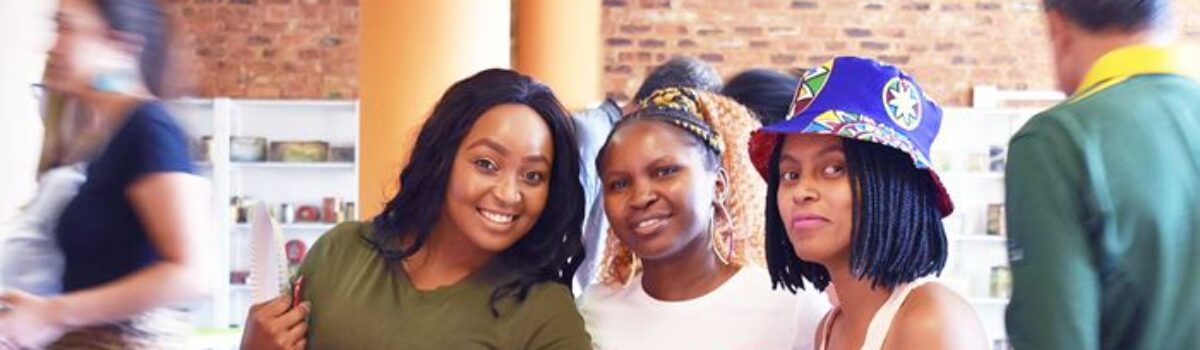


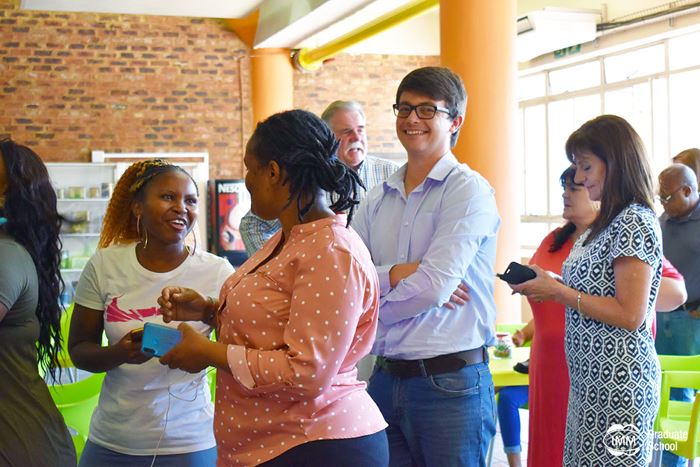

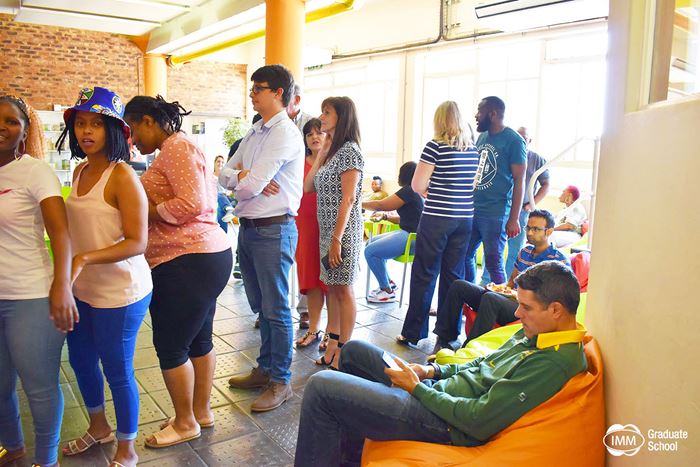














After all the frustration that I had experienced at other institutions, this was worth it. IMM gave me an opportunity to chase my dreams in acquiring a credible qualification in Marketing.
Completing this degree will open doors and birth opportunities that will see me grow in my career path and brings hope that one day I will become an entrepreneur.
Background
My journey with IMM started in 2010, at a time in my life where I thought I should give up on this thing called life. Let me paint my picture.
I was previously a student at another institute. After completing 2 years of my BCom, I experienced financial difficulties in the year 2007, my 2nd year tuition fees were outstanding, and my mother was still in debt for my 1st year fees. Although we struggled, I didn’t qualify for NFSAS because my mother was a state employee. So the obvious route for me now was to seek employment.
Fast forward to the year 2010, my fees are finally cleared, I still wanted to go back and complete my qualification. Then I was told that I didn’t notify the institution that I was on recess, therefore the time to complete my qualification had lapsed. I tried to fight this, and find a way of finishing off what I had started, but I didn’t win.
I remember driving home with my mother, with a broken heart, when I spotted an IMM billboard. Naturally, I went into Google, and looked up the institution. It was at that point that I now set my heart on starting afresh, and saw myself being relevant in society. We got home and I sat my mother down, told her that I now want to register with IMM and study towards my Diploma in Marketing.
Two and a half years later, I was so proud to have completed my diploma, and so excited to be graduating. After all the frustration that I had experienced at other institutes, this was worth it. IMM gave me an opportunity to chase my dreams in acquiring a credible qualification in Marketing.
What’s next for me? This was a thought that crossed my mind, sitting in the auditorium during my graduation proceedings in March 2013. I want to sit there, looking at the honours students.
February 2014, I registered to study towards a BPhil Hons in Marketing Management. This was not an easy journey. I registered 4 modules, and passed all 4.
Then came a rocky year, 2015. I had a bit a financial challenge, but persisted nonetheless. I registered for 3 modules and for the 1st time, I failed. My heart sunk. Now with only 2 modules remaining, I had to finish this qualification.
In 2016, I fell pregnant, gave birth, and my son passed on after a day, emotionally I was a mess. There was no way that I could have registered for that year.
Then came 2017, I had to press the reset button. I called the institution to confirm if I could still complete my BPhil, and yes, I had until 2019 to do so. Alright, so there’s still time, I thought. I started saving. I was left with the 2 most costly modules (Advanced Marketing Res: Report 402 and Advanced Marketing Application Report) and this time, I could not afford to fail.
In 2018 January, I registered again. Half way through the semester, I was not coping. These 2 modules were both time demanding and I felt that I was going to neglect one and end up failing again. So I wrote to the registrar, to move one module to the 2nd semester. This request was approved. I went on to pass my Advanced Marketing Res: Report 402. And I was happy. Second semester I registered for the Advanced Marketing Application report. With this semester came a challenge where I recently started a new role at work – Marketing Coordinator, and I was having trouble to commence with my Practicum work/logs.
Above all this, I was a single mom to an 8-year-old son who requires a lot of my attention for his school work and is relying on me to cook and clean for him as well. On the side, I still needed to go for counseling regularly, because losing a child that lived one day, is the most horrific encounter that I have to live with. Before I knew it, it was time to submit my report. And somehow, I knew that I hadn’t given 100% but I had to submit. Again, I failed.
But failing this time didn’t put me down. Instead, it reignited something inside of me. Now more than ever, I knew I had to finish this qualification. Again, I wrote to the registrar, to request for one final extension. And she made it clear, that if I fail again, my entire qualification goes down the drain. So yes, in 2019, again, I registered for my Advanced Marketing Application report. This time, I put my blood, sweat and tears into this paper. And finally, I submitted in May 2019. And on the 20th of June 2019, I received a message that I had passed. I cried. Finally, I have completed my qualification. There’s no words to describe how I felt.
Where am I today?
When I registered for the last 2 modules of this qualification, there was something in me that reignited hope. The focus for my work enables me to re-channel my thoughts, and emotions into something that is ultimately tangible and will reflect my own hard work, not just academically but financially too.
Completing this degree means so much to me. It will bring so much change to my life. I will be the first person in my family to have studied this far and I intend on furthering my marketing studies.
Completing this degree will open doors and birth opportunities that will see me grow in my career path and brings hope that one day I will become an entrepreneur.
Completing this degree will reaffirm the faith in my God to give me the strength to still be able to keep my head up, even in the worst circumstances.
Lastly, completing this degree will be an example to my son, that his mom has made something of her life despite life’s challenges.
It was also the technological advancements made to the online platform by IMM which saw an improvement in my marks. The online study system and virtual classrooms offered a new way of learning which enabled me to engage with other students, consult lecturers for help and access online study material. This just made it easier to study and do well, so thank you IMM.
Background
My journey with IMM Graduate School of Marketing Management started in August 2012. I registered for a BBA Marketing degree when IMM still operated from a small house in the Musgrave area of Durban- and today they have a big, beautiful office space with a student library and exam/lecture rooms.
When I received the email from IMM congratulating me on my graduation, I was a bag of mixed emotions, elated that I had finally reached the end of a long journey, but also sad that my time as a IMM student had come to a close.
During my studies there were so many moments I wanted to give up and I often felt ashamed that a 3-year degree was taking me so much longer to complete. This was partly due to finances however it was my lack of commitment and effort in the early stages of my degree, which reflected my poor results.
I really struggled to prioritize my studies at first, self-study requires a whole lot of self-motivation and discipline and meeting up with a friend for coffee or a beach day often won.
After failing a few modules, I got a wakeup call, I changed my priorities and attitude towards my studies which helped turn my performance around. While studying part time and working as an au pair in 2018 I discovered my passion for entrepreneurship. I started up two passion project businesses, Move fitness and Nel’turally Protein & Energy Balls. The beauty of this was twofold. I was able to apply textbook marketing and management principles to start up and grow my own businesses while also equipping myself with real life business experience to help me understand the complex textbook concepts in my assignments and exams, and this is when I realized just how valuable an education is!
It was also the technological advancements made to the online platform by IMM which saw an improvement in my marks. The online study system and virtual classrooms offered a new way of learning which enabled me to engage with other students, consult lecturers for help and access online study material. This just made it easier to study and do well, so thank you IMM.
A special part of my time with IMM is that as they grew so did I. I am no longer ashamed of my 8year journey to gain a 3 year degree, I learnt so much about myself, I got to explore my inner entrepreneur, discover my strengths, weaknesses and who I am as a business women during those years.
I have been able to experience the growth of this amazing institute and can vouch that the online experience and services offered to students today, is a game changer.
Before I close, my story is not complete without the mention of two pillars of strength throughout my journey: My father, Ronnie, who supported me from day one of 2012 to end date in 2019. He celebrated every pass and helped with the extra encouragement needed when I failed. He continued investing and encouraging me to pursue to the end, for this I will be forever grateful, I know many do not have a father figure like this amazing man.
And my husband, Jay, who offered himself as a lecturer and helped finance my studies. He gave the tons of emotional support and stayed up with me the many late nights that it took for me to be graduating.
It’s ultimately the support system from my family and IMM that helped carry me across the finish line and graduate this year at the KZN IMM graduation of 2020.
Where am I today?
Today I look forward to starting a new journey as a marketing coordinator at the new and exciting Umhlanga Arch, while also continuing my side hustle businesses, Move fitness and Nel’turally
What I learned through studying at IMM helped me achieve my KPIs and helped me to focus on the bigger picture by building a strong team to help the company and myself achieve our goals. My degree has added so much value to my life and it is definitely showing in my work.
Background
Near the end of 2015 the company I work for, Fidelity ADT, offered me a full bursary to complete my BCom Management and Marketing degree through IMM. I was elated and couldn’t believe I would finally have the opportunity to complete my studies. I trusted the Lord for this opportunity and was favoured to push for my dream.
As a child, my father taught my sister, and I that the only way to make your dreams a reality was through dedication and hard work. He and my mother tried their best to give us everything they could afford, but could not afford to pay for me to study after finishing high school. I got a job after school, but circumstances never aligned to allow me to study further. My parents always took pride in the achievements my sister and I achieved in our careers and I won’t ever forget how proud my father was when I told him I had the opportunity to enrol to study my degree.
During my first year of study, I received the devastating news that my father was murdered. My world fell apart in an instant that I had never expected. I was so new to the world of studying and with this news, I completely missed submission deadlines as I scrambled to finalise funeral plans, his estate and the shock and grief of all that happened. I was so grateful to IMM who supported me at the time and allowed me to cancel the subject and retake it the following semester. When I started studies in 2016 I was working as a Business Development Manager for Fidelity ADT and in 2017 I started working for the company as the Sales Manager in the company call centre. The content of my studies and all that I learned through IMM empowered me to be a better employee, a team player and a better leader. I was privileged to see and experience the day-to-day practical side of my studies every day which really helped me to better understand and comprehend the theoretical aspects behind my job that I was learning. Subjects like Project management, Business Statistics and Marketing Research were my favourites. These especially helped me in my line of work to gain an advantage in overcoming some of the challenges faced daily.
Where am I today?
What I learned through studying at IMM helped me achieve my KPIs and helped me to focus on the bigger picture by building a strong team to help the company and myself achieve our goals. My degree has added so much value to my life and it is definitely showing in my work. I was soon offered a new portfolio in the call centre and now oversee the sales, technical and client retentions.
On the flip side, studying with a full-time job, and going home to being a mother of two, a wife and a church women’s group leader was tough to say the least. There were many long weekends I remember where I would lock myself in a room and my family would only see me once or twice throughout the day as I studied. It was challenging but worth it. Finally being able to say “I did it” makes me feel more accomplished in a sense. I would never have been able to do all of this without the cheerleaders in my life like my mother, my sister, my parents in law, family, friends and of course my massively supportive husband and children. Trying to study without someone in your corner to help urge you on and motivate you, I think, would definitely make the journey almost impossible.
I now sit with a renewed sense of purpose, anxiously and excitedly looking forward to my graduation day, updating my CV and looking forward to making my family and the company I work for proud. My only disappointment in all of this is knowing that my father’s face won’t be in the crowd smiling and congratulating me on graduation day. What a journey it’s been and if I could do it all over again, I definitely would
So for those who don't think it's possible.... ITS MORE THAN POSSIBLE if you are disciplined and set your mind to it. Thank you IMM!
Background
I matriculated in 2013 with receiving 3 distinctions and an overall average of 76%. I was very excited to keep going in my studies however life throws us obstacles.
In 2014 my dad fell very ill and I had to become the breadwinner in the family which meant..... No money to study.
In 2015, my dad passed away and all my savings were depleted.
I came across IMM in 2016 and thought let me try my best to get a bursary and with lots of prayers I received my very first bursary! And then..... Second year and third year I gracefully received bursaries.
If it weren't for IMM, I would not be here today.... And it has been such a great journey.
Where am I today?
3 years later, 3 bursaries and a wonderful Cum Laude!
To celebrate, I went overseas last year to work as a manager in a well known restaurant and got to see a few magnificent places.
I am now even more excited to complete my BPHIL in Marketing Management at IMM.
So for those who don't think it's possible.... ITS MORE THAN POSSIBLE if you are disciplined and set your mind to it.
Thank you IMM!
I needed this qualification to show to myself that I am worthy
Background
I got pregnant at a young age and had to give up on my dreams of studying. All the money I had, had to go to my child and surviving. Within a year I was a single mom with no child support coming in and needing to survive. Somewhere in the back of my head I always wanted to better myself, I always wanted a certificate or something. I needed this qualification to show to myself that I am worthy. But I could never just get the money to start this journey that I was longing for.
Where am I today?
My son is 12 this year, my graduation for the Higher Certificate in Marketing would have been on the 16th of April 2020 but because of Covid-19 it was postponed. I don't care about the ceremony or what other people say. I showed myself that I could do it! I am now a married woman, mother and full time employed. I made the sacrifices needed. The worst part for me was realising how much time I had, how much time I wasted on nothing. I was a great example to my son. As I did not just nag him to do his homework, I sat and did mine with him! My husband also started studying. We are taking it one step at a time. My husband works shifts, so his study schedule differs from mine but it works for us and it is something we can share. Something that makes our bond stronger. We are the only ones that understand our circumstances and sacrifices. We are working on a better future for our family.
I am so thankful for IMM and am already going back and fourth about what I could do next!
Background
I finished school in 2009 but could not decide what to study. Instead I went straight into working as an Au Pair, administrator and bar tender (yes 3 jobs!)
Once I had saved up enough money, I embarked on my gap year to be an Au Pair in America. I stayed in New York and looked after 2 wonderful boys.
When I returned, I was too used to all my independence I went straight back to work, thankfully just 1 admin job this time.
Long story short, I finally ended up in a company that pushed their staff to study and that's when I started doing my research and found IMM.
I still remember going in to the Durban office and feeling so welcomed by all the staff, they were all so passionate about the courses they offered.
Being me, I would not settle for anything less than a degree so I chose my course BBA Degree and got started.
Studying part time after being out of school for so long was not easy. There were moments when I thought I would not make it but every pass motivated me to move forward! I finally passed my final exam mid-2019 and the feeling is amazing! Unfortunately, due to COVID19 my graduation ceremony has been postponed indefinitely, but I still celebrated at home – because it is a huge achievement and no one can tell you otherwise :)
I am so thankful for IMM and am already going back and fourth about what I could do next!
Where am I today?
I am the regional manager of KZN for DCB Logistics, a courier company moving freight around the country. I am apart of the sales team and assist with our digital marketing as well!
My journey has been nothing short of rising to the top. I believe that you are only a success at the moment you perform a successful act. You have to continuously do it in order to stay at the top and climb ladders.
Background
I knew that to make an impact and make my mark in marketing excellence I had to identify an industry that did not pay much attention to marketing. I found myself in the South African education industry. Since I started, my goal has been to implement marketing at its highest level for growth and development for South Africa.
I began coaching my childhood favourite sport, hockey. I excelled in playing for Zimbabwe and provincial school teams in my high school days. After securing a hockey portfolio at Windhoek High School, I accompanied the school’s 1st team boys to their first ever Cape Town Brothers International tournament in 2016.
This trip yielded positive results for me as I managed to secure a bursary and a coaching position at Reddam House Constantia, Cape Town.
Having migrated to the Western Cape in South Africa, I did not stop there. My passion for networking saw me widen my horizon, joining the membership and professional development program of The Marketing Association of South Africa (MASA).
I made the most of my time at Reddam, as I brushed shoulders with the school’s administration staff and hierarchy.
This is where I figured out that there was a gap within marketing a school.
I continued to take advantage of my bursary by furthering my studies in the direction of marketing, enrolling with IMM Graduate School.
With my eagerness and drive to learn, I jumped at the opportunity to reunite with the Reddam House brand again. This time in the fast lane of Gauteng at a newly built Reddam House Helderfontein, located in Fourways.
With a new campus in need of a marketing powerhouse, I knew this was my time to make my mark and a name for myself.
I began to settle in after having been appointed the online and media portfolio for the campus by the head, Colleen Traviss-Lea. I admit that I did not always make the right decisions but learnt on the job and from mistakes I made.
I expressed new and innovative marketing ideas to further establish the campus around the community.
Where am I today?
At this moment, I am also involved in consultancy work. I am the founder of Newcorn Branding, a Marketing Consultancy Aide named after my father’s business ventures.
Newcorn offers new and upcoming companies innovative marketing structures and assists in brand identity.
I find drive and motivation by businesses and I intend to revive the Newcorn brand in its business ventures such as farming, construction and retail at a later stage in my life.
As for now, I am happy and content with where I am. I plan to reach the Chartered Marketer title and one day complete an MBA in Strategic thinking in Business overseas. So fingers crossed.
My journey has been nothing short of rising to the top. I believe that you are only a success at the moment you perform a successful act. You have to continuously do it in order to stay at the top and climb ladders. I am not surprised by how far I have come and the places I have been, I come from a family with politicians, well respected war veterans and pastors to say the least. So Manjengwa is not only a name but a brand.
It often seems impossible until it's done!
Background
My IMM Diploma gave me the confidence to achieve in my career and to go back to University to further my education part-time. These achievements gave me the tools to be able to emigrate to the USA.
Where am I today?
I am a Product Manager for a global automotive parts manufacturer in Illinois, USA